
Cleaner and safer oil changes in just 30 minutes! Parker Hannifin’s QuickFit Oil Change System revolutionizes the process with a faster, cleaner and safer way to change engine oil. In three easy steps, purge, extract and refill your system with new oil without ever spilling a drop. QuickFit helps you simplify your routine maintenance, increase productivity and virtually eliminate the risk of spills and contamination.




Congratulations to this month’s winner, Stephanie Schummer!
Want to win a $50 American Express gift card? We’re giving away one each month for the rest of the year! Just follow us on Facebook, Twitter, Instagram or LinkedIn and you will automatically be entered to win. Follow us on multiple networks to increase your chances to win!


Tuesday, September 22, 2020 by

In our first post of this series, Troubleshooting Fluid System Connection Leaks, we gave an overview of how to troubleshoot a system that’s leaking and the areas to focus on. Now that the leak has been located and the probable causes are narrowed down, what should you do to fix it? In this post we’re going to take a deeper dive into what “A Leakage From a Tube or Swivel Nut” means and what you can do about it.
When it comes to leaks, you should make no assumptions. It is worth your time to at least consider every possible cause before jumping in and fixing a leak. Often, only the symptom is what is most visible, and if a fix is completed based solely on that, the true cause could be missed which can lead to more costly leaks and fixes in the near future.
In our first post, we outlined the following probable causes for a leakage coming from a tube or swivel nut as:
- Inadequate Torque/Improper assembly
- Misalignment or Improper Fit
- Missing or Damaged O-ring
- Braze Overflow on sealing surface
- Extruded O-ring
- Damaged Fitting
At this point you have narrowed your leak issue to the area around the nut in your connection. Now how do you determine which of the above is the root cause? You will want to investigate all of these probable causes, as in some cases, you may have more than one problem. Since the system is already being investigated, don’t just assume that you found the root cause before eliminating every probable cause. To get the most accurate picture of the leak cause, you may find it helpful to take the connection apart where the leak is located. As always, use proper safety measures and be sure to lockout and power down the equipment. If you are not sure what safety measures are needed, ask someone for guidance.
Note: This post will be addressing leaks specifically from a tube or crimp nut. If you think the leak is coming from the locknut on an adjustable port end, you will want to read our previous post on port leaks instead.
Inadequate torque/improper assembly
A certain amount of torque is required to provide enough clamping load at the joint to resist the forces of internal pressure and vibration loosening. The Parker Catalog 4300 provides the recommended torque for each thread type and size in our Assembly/Installation section.
Pro Tip: For O-ring Face Seal (ORFS) components, keep a close eye on assembly torque. ORFS components will show a rapid rise in torque when the sealing surfaces make contact. Do not misinterpret this as reaching correct the assembly torque.
Reference our detailed assembly instructions in the Assembly/Installation section in the Parker Catalog 4300. Assembly instructions and videos can also be found on TFDtechConnect.com.
Misalignment or improper fit
A critical step in the assembly process is aligning the tube end with the connecting fitting face. If a tube is not properly aligned with the sealing surface of the fitting before tightening the nut, a leak path will be created. The proper procedure is always to align the tube and connecting sealing surface of the fitting properly before tightening the tube nut. Look at your connection. If the tube looks like the one on the left side of Figure 1, you have a misaligned tube. If the tube looks like the one on the right side, then you have an improper fit.

Figure 1. Incorrect alignment and fit
For a mis-aligned tube, the tube will need to be properly bent more so that it is aligned with the fitting, rather than making up the gap with force. For an improper fit, it is the same situation as a misaligned tube, you need to correct this. In most cases this will involve re-making the tube because it is not long enough to make the connection.
If there is a gap between the fitting face and the connecting tube (due to mis-alignment or improper fit), a leak path will be created, as this is your sealing surface. Do not rely on the tube nut to make up this gap; by using the nut to close the gap you are only hiding the problem, not eliminating it. If the tube alignment or fit is not correct, you may be causing more harm than good by proceeding with assembly without properly correcting the issue.
Mis-alignment and improper fit can affect two things:
- the assembly torque
- the integrity of your connection
If you are using your tube nut to correct the gap between the tube and the fitting, you are putting stress on your connection. If the connection is not aligned or fitted properly prior to tightening, most of the torque will be used up in achieving alignment and may not be enough to create the adequate clamping load needed to properly assemble the connection.
When properly aligned, the tube nut should be able to thread on completely by hand before wrench tightening. We can’t stress this enough, do not use tightening of a tube nut for pulling a misaligned joint together, this will put an undesirable strain on the joint, leading to leakage or, in extreme cases, shearing the fitting. We will be releasing another post soon about the failure modes of misalignment and improper fit, as these two problems can lead to very dangerous system failures.

Figure 2. Proper alignment
Missing or damaged (extruded or pinched) O-ring
Be careful, this section talks about O-ring damage. O-ring damage on fittings with a tube or crimp nut are most commonly going to be O-ring Face Seal (ORFS) fittings. If you are experiencing O-ring issues on a non-ORFS part, you may actually be looking for our previous post where we detail port leaks. If you do in fact have a port leak, you will want to read that post instead, as this post is only talking about O-ring issues on an ORFS fitting.
There is a large range of what a damaged O-ring could look like. What you are looking for is anything that looks out of the ordinary. Are there pieces missing? Is it frayed? Does the O-ring look pinched and/or deformed? Look very closely at it, as the damage might be small. Figure 3 illustrates obvious and not so obvious damage to the an O-ring.

Figure 3. Damaged O-rings
For O-ring Face Seal (ORFS) fittings, one common form of damage is an extruded O-ring. When properly assembled, ORFS fittings make metal to metal contact outside of the O-ring groove, hence holding the O-ring captive. If there is a gap between the metal surfaces, then excessive internal pressure can force the O-ring material through the gap and even more so if the O-ring is softer than the recommended 90 durometer hardness. The O-ring can also be extruded if an attempt is made to bleed off air by “cracking” an O-ring sealed joint.
Pro Tip: Parker’s Trap Seal in Seal-Lok ORFS fittings helps prevent O-ring extrusion with its special trapazoidal shape that fits securely into the O-ring groove, reducing O-ring fall-out and extrusion issues.
Extruded O-rings will need replaced, but before you do that first find the root cause. Use the following items as a checklist when examining the system to pinpoint what caused the O-ring extrusion.
Check for:
- Proper alignment
- System pressure surges in excess of 133% of the fittings working pressure
- O-ring of proper hardness
- Proper torque
Another possible root cause is that the O-ring is missing and was forgotten during assembly. If the O-ring fell out during shipping or assembly, it may not have been an obvious error. If you have an O-ring groove with no O-ring in it, then a seal cannot be made. In figure 4, there is an example illustrating where the O-ring is supposed to be located but is missing. If you suspect an O-ring is missing or are not sure if one is missing, check with the fitting manufacturer to see if one should have been used.

Figure 4. O-ring groove missing the O-ring
When replacing a damaged or missing O-ring, be sure to select the correct replacement. Just because an O-ring fits, does not always mean it’s the correct one for the job.
Three critical items to consider with O-rings are:
- Size – Never assume that the O-ring is the correct size. If it’s too small or too large the O-ring won’t do its job.
- Material – You may need a specific material type for your application. You wouldn’t want to use a material only to find out afterwards that it is incompatible with your system media and/or temperature.
- Durometer (hardness) – Softer O-rings have a higher tenancy to get damaged or be extruded out of the fitting. In most cases 90 durometer is needed.
If you are unsure on what O-ring to use, a fitting manufacturer will be able to point you in the right direction.
Pro Tip: If you find yourself frequently replacing an O-ring, it may be that you didn’t find the true cause. In some cases, a damaged O-ring is a symptom, not the cause. This is why we encourage you to investigate all the probable causes listed above, ensuring your investigation was thorough enough to find the true cause(s).
Braze overflow on sealing surface
Brazing is a difficult practice to perform. One of the issues that can come up with brazing is braze overflow on the sealing surface. This issue is most apparent with leaks coming from the tube nut, as the sealing surface is being obstructed. Overflow can occur on the sealing surface because of the location of the heat when the ring melts. Braze alloy tends to flow in the direction of higher temperature. As soon as it is evident that the ring is melting, the heat should be relocated to the small diameter end of the sleeve to encourage the alloy to flow through the joint. If you discover there is braze overflow, you will need to remove the affected sleeve and re-braze a new one in its place prior to assembly.
The next post in this series will be specifically addressing brazing issues, so stay tuned.

Figure 5. Braze overflow on sealing surface
Damaged fitting
What does a damaged fitting look like? Some fitting damage is easy to spot, like a large crack or scratch. In some cases, though, minor damage may be missed or overlooked. Take a critical eye to your fittings, paying special attention to the sealing surface. Even a small scratch in the right location can prevent a seal from forming. If there is any damage to the sealing surface, you may need to replace the fitting. Figure 6 points out where the sealing surfaces are and where you will want to pay special attention. The ORFS sealing surfaces are where the flanged or brazed tube and ORFS O-ring and fitting face come in contact. The 37-degree flare sealing surfaces are where the flared fitting nose and the flared tube come in contact.

Figure 6. Sealing Surface Locations
Again, obvious answer, if the fitting is damaged, replace it with a good quality fitting. Fittings often get nicks and scratches during handling or storage if they are not properly protected. Damage on a sealing surface or on threads is irreversible. It is best practice to examine a fitting before assembly to ensure that no damage happened during shipping or handling. Looking the fitting over first will prevent headaches in the future.
Always keep any shipping caps on fittings until they are installed. This practice helps to prevent damage during storing and handling. Be sure to be careful when assembling fittings as damaged often occurs in the process of assembly.

Congratulations to this month’s winner, Alan Janak!
Want to win a $50 American Express gift card? We’re giving away one each month for the rest of the year! Just follow us on Facebook, Twitter, Instagram or LinkedIn and you will automatically be entered to win. Follow us on multiple networks to increase your chances to win!
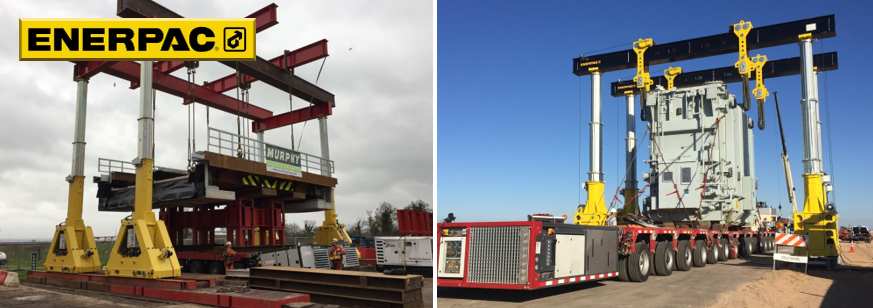
Enerpac Hydraulic Gantries
Enerpac Hydraulic Gantries are a safe, efficient way to lift and position heavy loads in applications where traditional cranes will not fit and permanent overhead structures for job cranes are
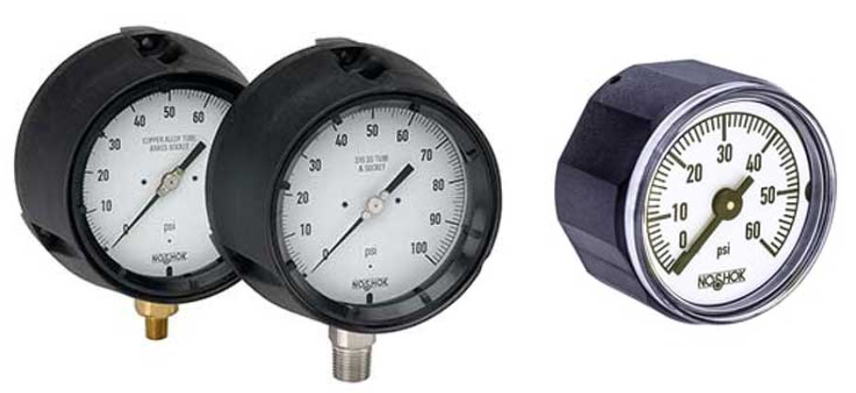
NOSHOK Pressure Gauges
NOSHOK offers a broad range of pressure gauges that are engineered with state-of the art technology to provide excellent accuracy and reliability and accommodate nearly every application. NOSHOK’s industry-proven dial
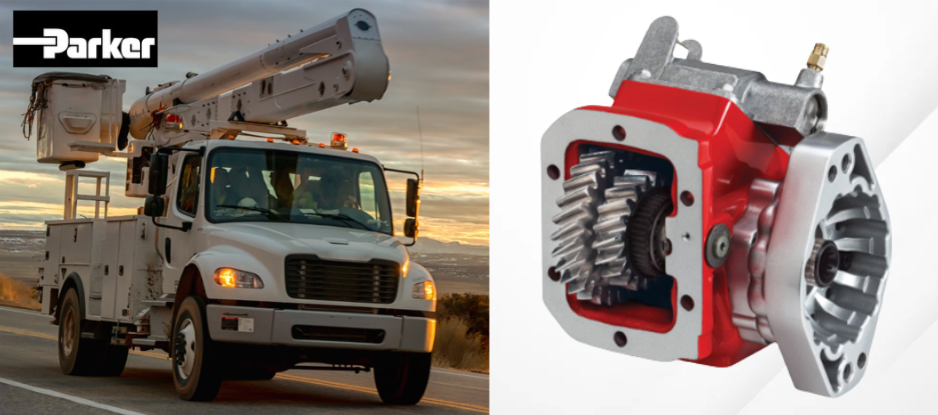
Parker Chelsea 442 Series Power Take-Off (PTO)
The Chelsea 442 Series Power Take-Off (PTO) is an economical workhorse that features a cast iron housing and tapered cone bearings on the output shaft, giving it a robust torque
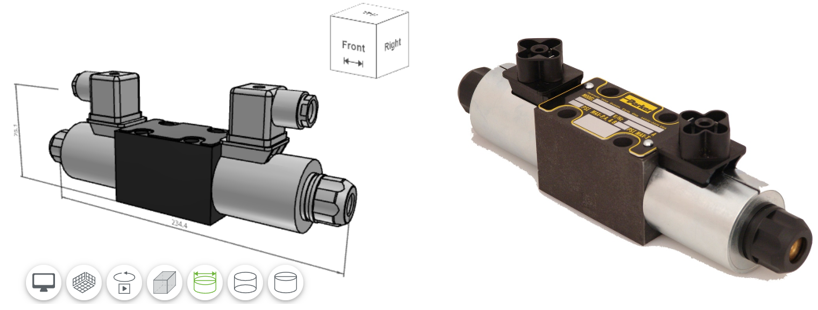
New Parker D1VW eConfigurator
Parker’s Hydraulic Valve Systems Division has released a significantly enhanced configuration experience for the Parker D1VW directional control valve series on Parker.com. The updated D1VW Configurator now provides: Complete and

5 New Air Compressor Trends to Watch in 2026
What does the future hold for compressed air technology? The compressed air industry is expected to grow at a 4.47% combined annual growth rate through 2032 as a result of

Register Today for Our Upcoming
You’re Invited! Join us at our upcoming open houses for product demos, giveaways, catered lunch and your chance to win an Ooni Pizza Oven! Muskegon, MI (West MI Rubber) –

This Week is ParkerStore Customer Appreciation Week
Join us this week as we celebrate you, our valued customer at all our ParkerStore locations! Stop by for complementary lunch, free giveaways & every purchase you make enters you to win
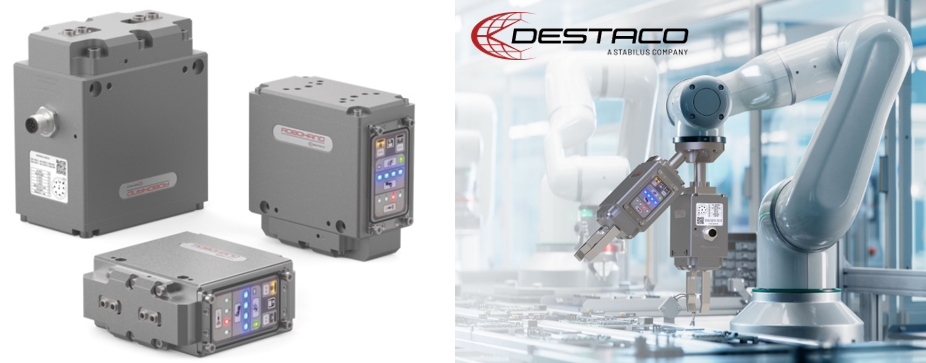
DESTACO Electrical Parallel Gripper – eRHD Series
DESTACO’s Robohand eRDH Series of electric grippers are designed with state-of-the-art gripper technology. eRDH grippers integrate 4 teachable sensors, speed control, force control, and internal or external grip settings. This
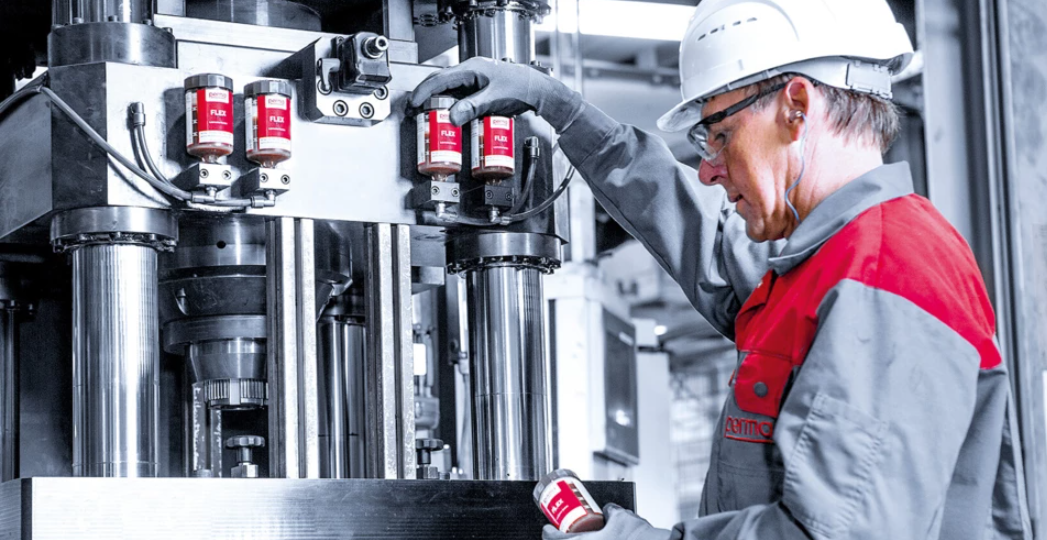
perma FLEX Automatic Lubrication System
perma FLEX is a single-point lubrication system that is used in a variety of applications and industries. Ingress protection to IP 68 level guarantees reliable lubrication in extremely dusty and
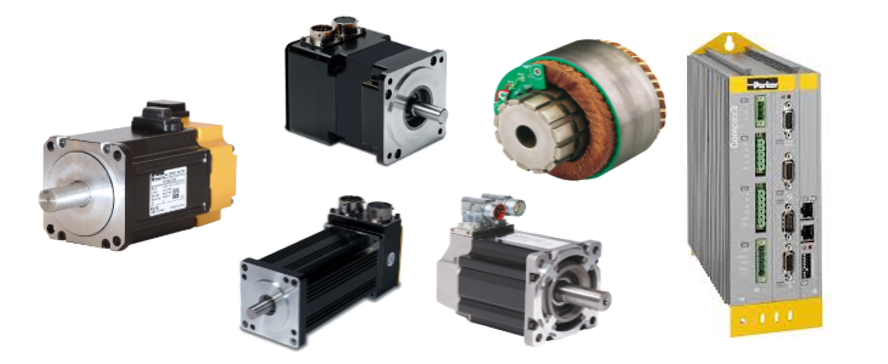
A Guide to Servo Motors & Drives
Many of the products that we use each day rely on automation for production. The machines behind these products are technologically advanced and require multiple electromechanical components to maintain accuracy,
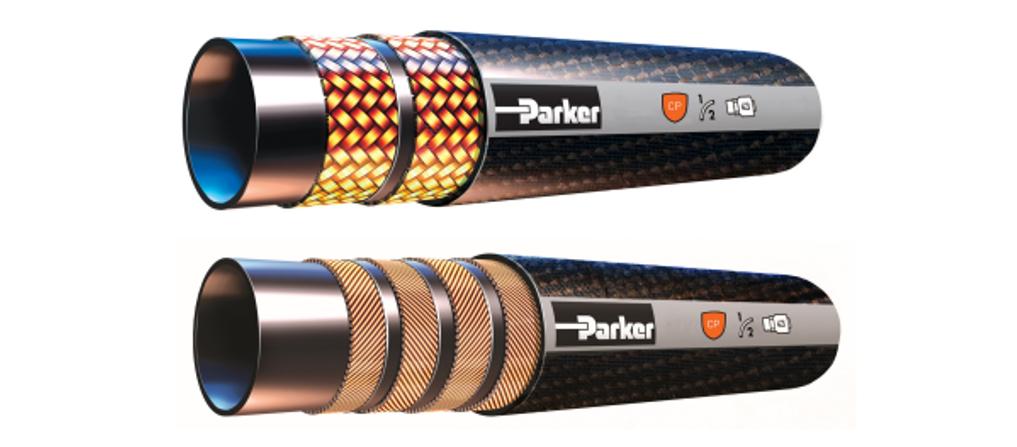
Parker Critical Protection Hose Cover
Used in the harshest of applications, Parker’s new Critical Protection (CP) cover offers increased impact damage and abrasion resistance allowing for longer hose life, increase in productivity, and more up
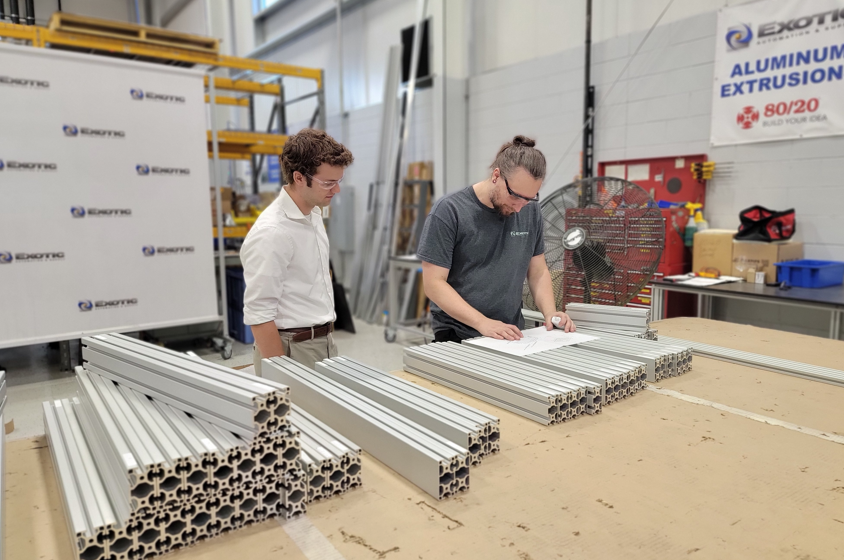
Build Your Idea with 80/20 Framing
80/20 T-Slot Aluminum Framing is a construction system you can use to build virtually anything. The aluminum profiles, or bars, can be mixed and matched to create any customized solution or innovation.